Grand Prairie, TX
Commercial roofing support for Grand Prairie, TX properties, including leak repair, membrane replacement, roof coatings, inspections, and maintenance planning.
Grand Prairie's commercial inventory spans horse-racing and entertainment anchors on the west end, a fast-growing industrial corridor along the 360/161 interchange, and 1990s office and retail stock that's hitting its first major replacement cycle. We run routes from our downtown Fort Worth office — about 28 minutes east on I-30 — and cover the full city.
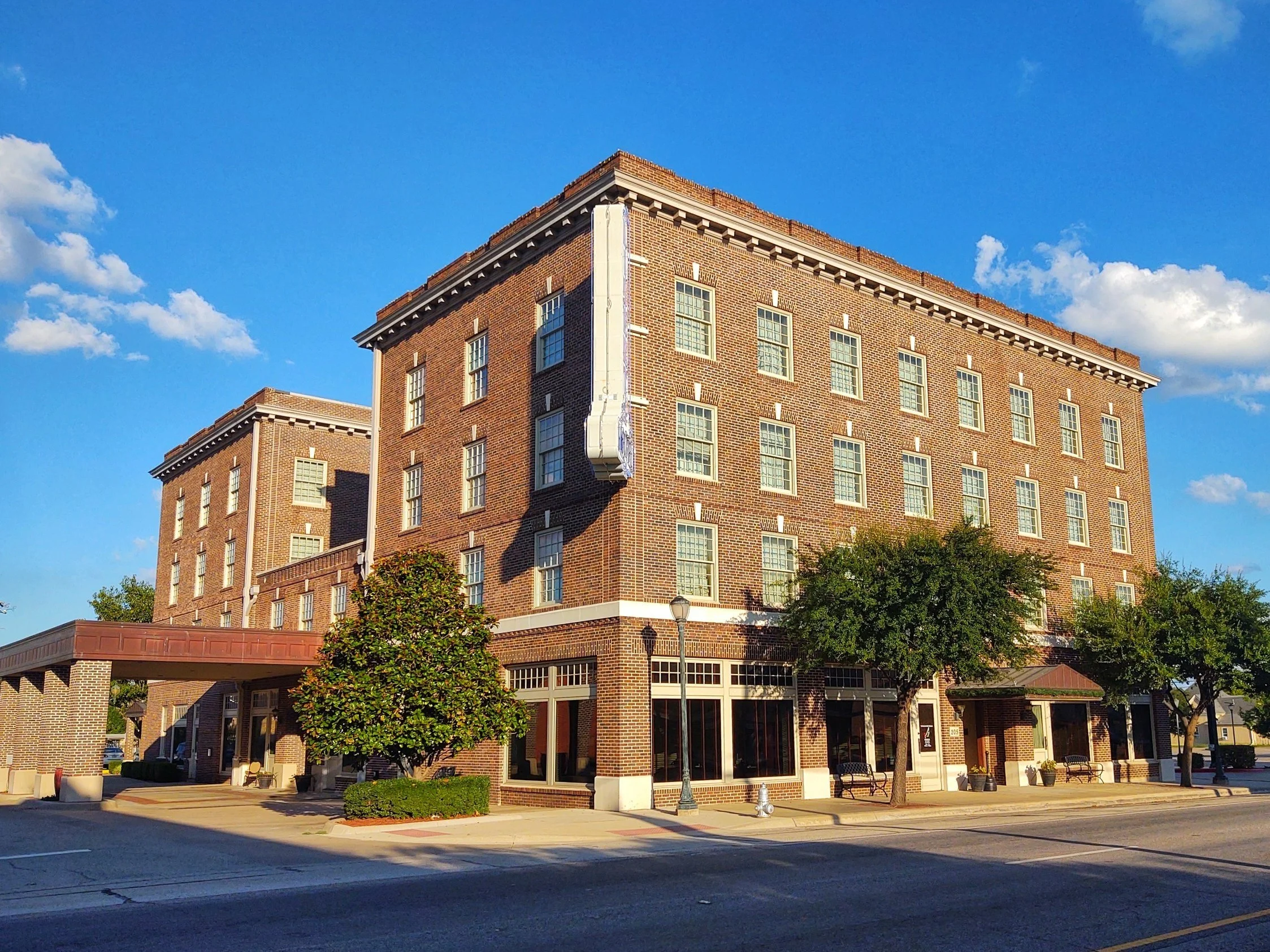
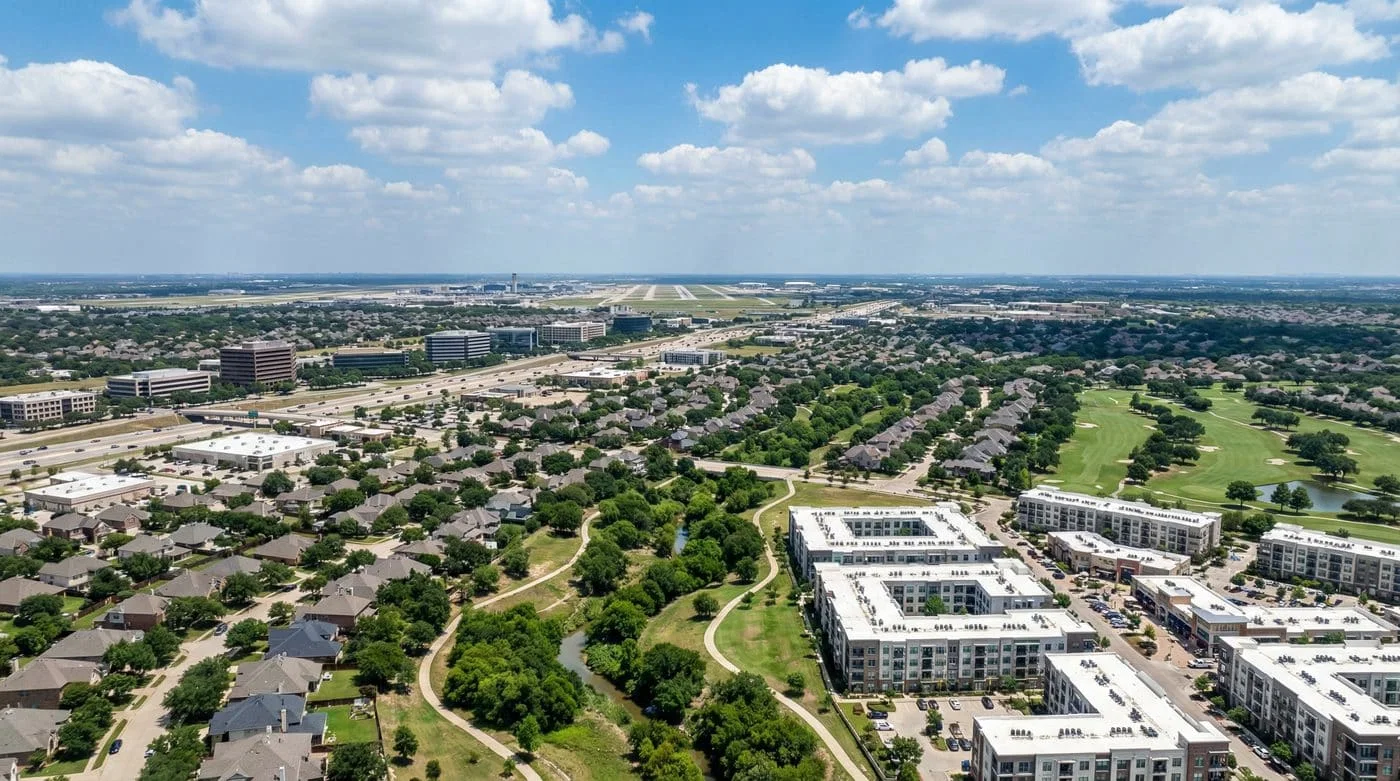
Grand Prairie sits at the crossroads of Tarrant and Dallas counties, and its commercial roof inventory reflects that split identity. The western end of the city — Lone Star Park, the Verizon Theatre at Grand Prairie, the Epic Waters indoor waterpark complex — carries entertainment-use roof systems with demanding operational schedules that constrain when production work can happen. The eastern end runs into the 360/161 industrial growth corridor, where speculative warehouse and light manufacturing buildings are still being delivered on new-construction timelines. In the middle, a belt of 1990s retail strip centers and suburban office buildings on SH- has been cycling through first and second-generation TPO and modified bitumen replacement work since about 2018.
The geological picture for Grand Prairie commercial buildings is worth noting. The city sits on the eastern edge of the Blackland Prairie formation — the heavy-expansion clay that causes the differential foundation movement that Dallas contractors deal with constantly. Buildings on the western fringe, near the 820/360 interchange, are transitioning toward the Eastern Cross Timbers limestone subbase that's more stable under load. Owners of mid-1990s Grand Prairie buildings on the Blackland clay side often come to us with parapet flashing cracks and drain misalignment that trace back to slab movement, not roofing failure. Our inspection reports call that out so the owner knows what they're dealing with before they commit capital to a roof scope.
We cover Grand Prairie from our Fort Worth office as a routine service area — same response times as mid-Tarrant County. Our project managers carry City of Grand Prairie permit credentials and know the city's development services office from working the 360/161 corridor buildout.
Grand Prairie Roof Inventory by Corridor
Entertainment corridor (Lone Star Park, Verizon Theatre, Epic Waters): Lone Star Park's grandstand and support buildings carry large-span metal deck roofs with TPO membrane — the grandstand roof alone is over 100,000 sq ft of low-slope surface that hasn't been fully replaced since construction in 1997. The Verizon Theatre is an outdoor amphitheater, but the enclosed back-of-house, dressing-room, and production office buildings are standard commercial TPO that we inspect and maintain. Epic Waters, opened 2018, is on modern mechanically-attached TPO with warranty still active — but the mechanical room cluster on the roof requires coordination with the facility's HVAC contractor for any penetration work. Production at all three sites has to work around published event calendars.
360/161 industrial corridor (Mountain Creek Parkway to Carrier Parkway): This is Grand Prairie's fastest-growing commercial roof segment. New-construction speculative warehouse and distribution buildings in the 200K-600K sq ft range are delivering on 18-24 month schedules; tenant-improvement roof work (skylights, penetrations, HVAC curbs) follows immediately after delivery. The spec buildings are on 60-mil mechanically-attached TPO with 20-year NDL warranty — our new-construction crews are active in this corridor. The more interesting work is the first-generation industrial buildings from the early 2000s, now reaching 20-year replacement cycles, where the original TPO is showing seam fatigue from the thermal cycling that the west-facing 360 corridor gets in summer.
SH-303 / Beltline Road commercial belt: Grocery-anchored and big-box retail centers, suburban professional office, and medical office buildings. Most are 1993-2005 construction on modified bitumen or first-generation TPO. Replacement cycles here run heavy through 2028. Tenant-occupied buildings require sequencing around retail and medical office operating hours — we do night and weekend tear-off on occupied retail when the scope requires it.
Climate and Code Notes for Grand Prairie
Grand Prairie falls fully in the Blackland Prairie climatic zone on its eastern half — high-expansion clay, 100°F+ summer surface temperatures on dark roofs, and the same severe hail exposure as the broader DFW corridor. The 2009 Grand Prairie hail event (documented 2-inch stones across the city) and the 2024 DFW-wide hail sequence both drove insurance-claim roof work in the 360 corridor. We spec hail-resistant cover board (HD polyiso or HD gypsum) under every TPO install in this city and document the impact rating for insurance underwriter records.
City of Grand Prairie building permitting runs through the Development Services department at City Hall. Permit timelines for commercial roofing are comparable to Fort Worth's — typically 5-10 business days for straightforward replacement scopes. The 360/161 corridor has seen active code enforcement on rooftop mechanical units, so we flag any non-compliant curb or equipment pad conditions in our inspection reports before the permit gets pulled.
Need a Grand Prairie commercial roof inspection or replacement scope?
Our project managers will walk the roof, document conditions, and deliver a written report — for capital planning, insurance documentation, or warranty support. We cover Grand Prairie as a routine service area from our downtown Fort Worth office.
Frequently Asked Questions
How long does it take your crew to reach Grand Prairie from your Fort Worth office?
About 28 minutes in normal traffic via I-30 east. Emergency dry-in mobilization for Grand Prairie is same-day — we treat it the same as mid-Tarrant County. For buildings on our maintenance contracts, after-hours and weekend emergency response is available.
Do you pull City of Grand Prairie permits?
Yes. We carry City of Grand Prairie permit credentials and pull permits for all replacement work and for repair work above the city's permit threshold. Grand Prairie's Development Services office is familiar to us from the 360/161 corridor buildout work. Permit fees are passed through at cost.
What types of buildings make up the Grand Prairie commercial roof market?
Three main buckets: entertainment-use buildings at Lone Star Park, Verizon Theatre, and Epic Waters (with operational scheduling constraints); fast-growing 360/161 industrial and distribution buildings; and the mature 1990s retail and office stock on SH- that's in active replacement cycle. Each bucket has different roof systems, different operational constraints, and different scope priorities.